Touro Synagogue, Trinity Church and colonial Newport
A colony founded on freedom of conscience left Newport a synagogue, a church, a state house and a market hall within a few streets, along with a history of slave trading that the same streets also hold.
Rhode Island began as a refuge. Roger Williams founded Providence in 1636 after he was banished from Massachusetts, and the colony's charter of 1663 promised that no one would be troubled for matters of religion. Newport, founded in 1639, became the colony's busiest port and a place where Quakers, Baptists, Anglicans and Jews all built houses of worship within a few streets of each other.
Those buildings still stand. In a morning you can walk from a Georgian synagogue to a white wooden church to the brick state house where independence was proclaimed, and you will rarely be more than five minutes from the harbour.
Touro Synagogue
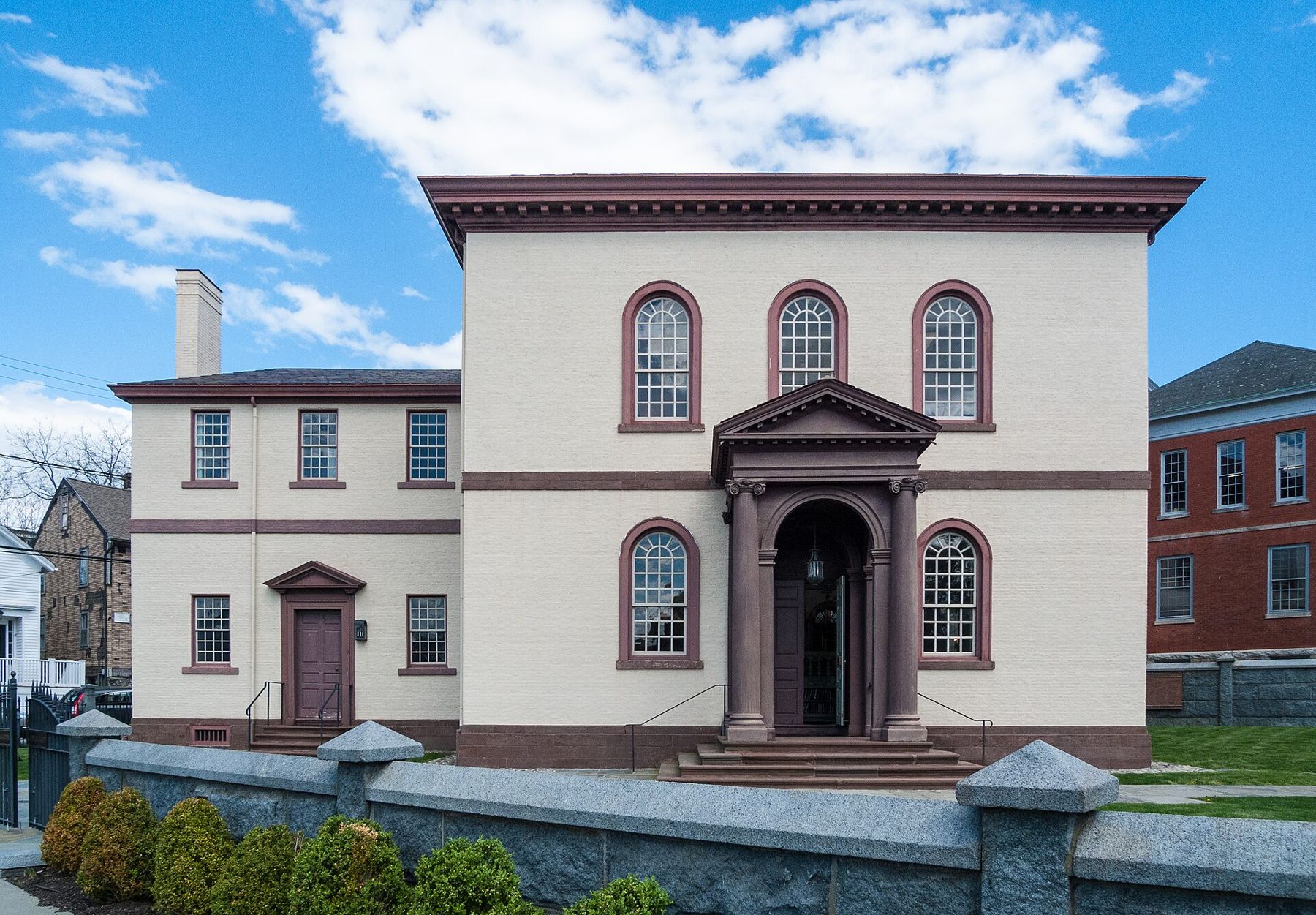
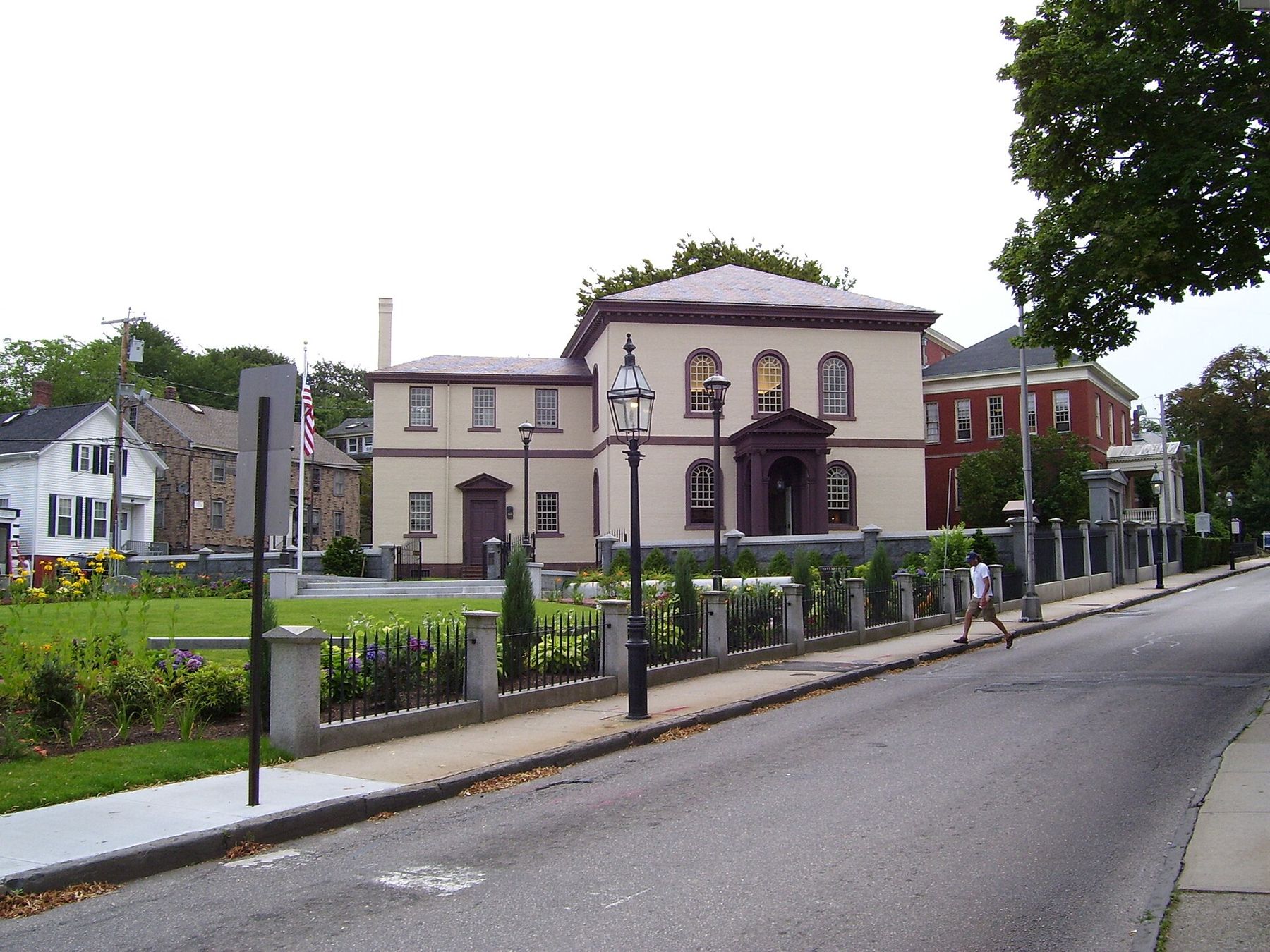
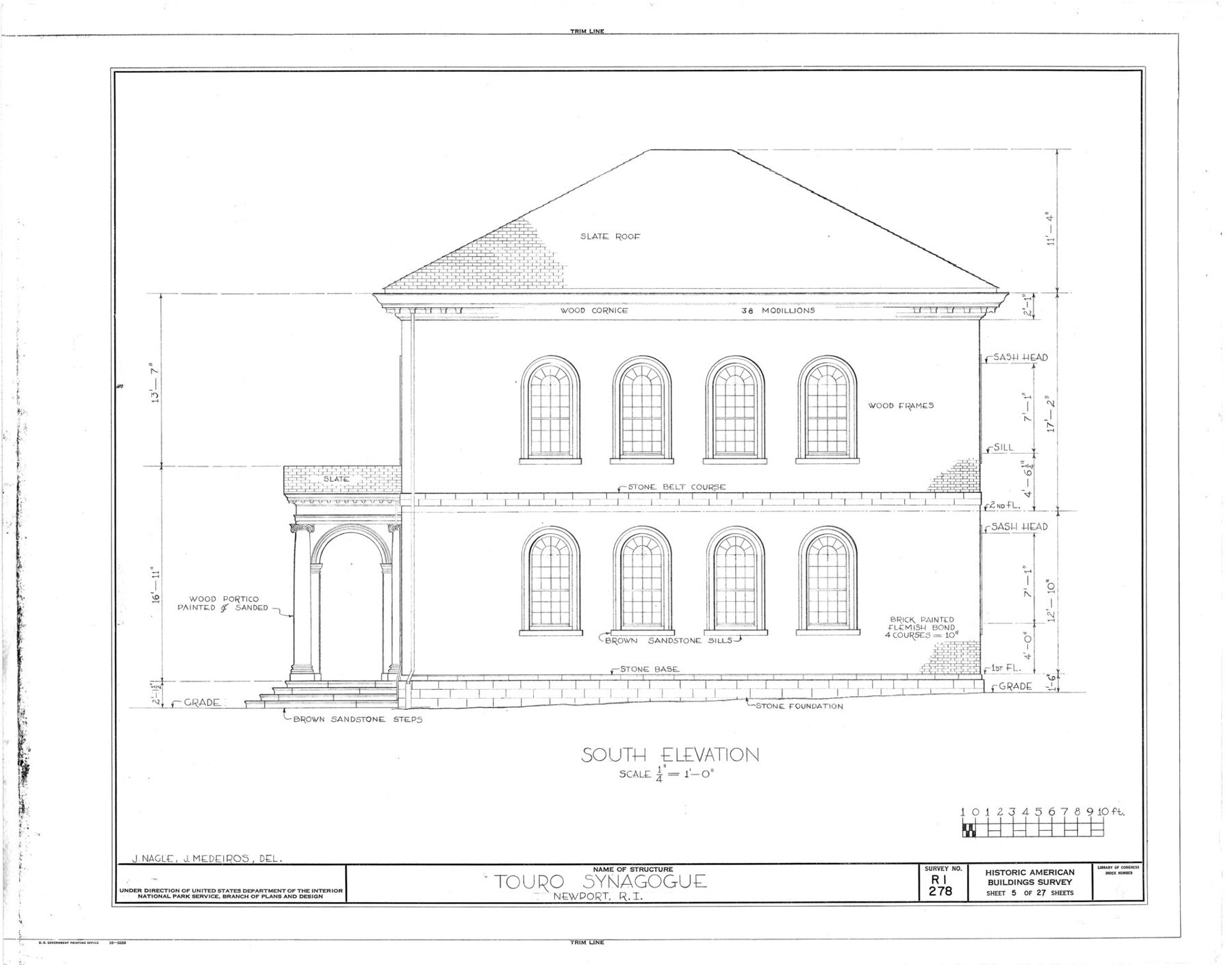
Touro Synagogue on Touro Street was dedicated in 1763 and is the oldest synagogue building still standing in the United States. Its congregation, Jeshuat Israel, was founded by Sephardic Jewish families whose ancestors had fled the Inquisition in Spain and Portugal. The architect was Peter Harrison, who also designed the Redwood Library and the Brick Market.
The congregation thrived while Newport's trade thrived. After the Revolution, when British occupation had emptied the town and its commerce moved elsewhere, most of the Jewish families left, and for decades the building stood closed, cared for by trustees and funds left by members of the Touro family. Worship resumed in the late nineteenth century as new Jewish immigrants arrived, and it has continued since.
From the street the building is plain and set at an angle, so that the ark inside faces east toward Jerusalem. Inside it is a light, elegant room with two tiers of columns, a gallery and brass chandeliers. The synagogue is still an active place of worship and a National Historic Site. Visits are by guided tour at set times that change with the season, so check before you go, and expect a security check at the door.
In 1790 George Washington visited Newport, and the congregation sent him a letter of welcome. His reply promised that the new government of the United States would give "to bigotry no sanction, to persecution no assistance". The letter is one of the founding statements of religious freedom in the country, and it is read aloud in Newport every August.
His reply promised that the new government of the United States would give "to bigotry no sanction, to persecution no assistance".
Trinity Church and its graveyard
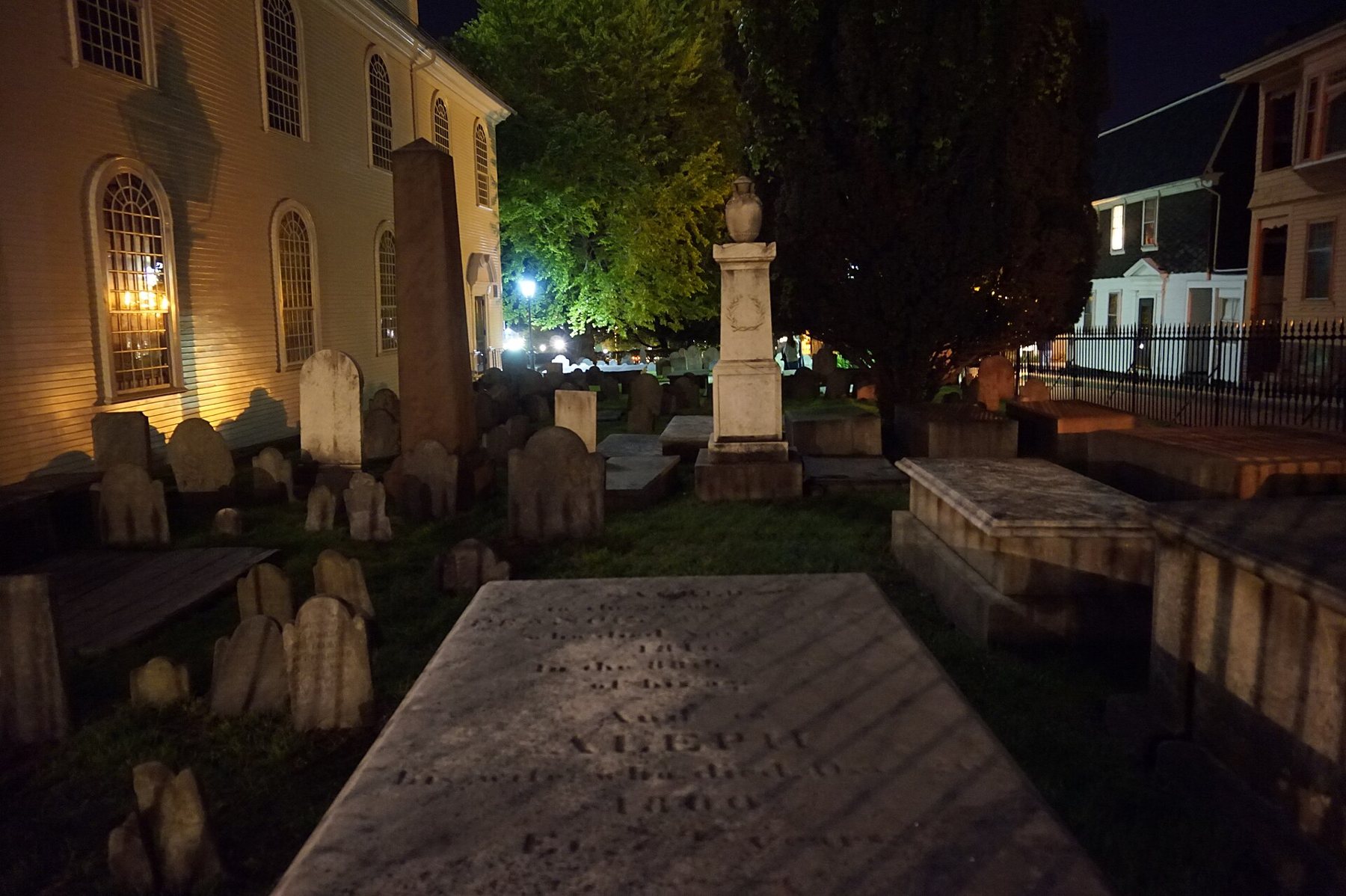
A few minutes away on Queen Anne Square stands Trinity Church, a white wooden church built in the 1720s with a tall spire that is a landmark from the harbour. Its interior keeps box pews and a rare wineglass pulpit raised high on a single stem. The church is an active Episcopal parish; it is usually open to visitors in the warmer months and for services all year.
The graveyard beside it holds slate headstones carved by Newport stonecutters in the eighteenth century, many with winged faces and careful lettering. Walk it slowly and read the names of merchants, captains and their families, and notice how the carving changes from the older stones to the newer ones as styles and stonecutters changed over the century.
Washington Square and the Colony House
Washington Square, the old Parade, was the centre of colonial Newport. At its head stands the Colony House, a brick building of 1739 that served as Rhode Island's seat of government. The Declaration of Independence was read from its steps in July 1776, and during the Revolution the building was used by British and then French troops. It is opened for tours from time to time.
Inside, the restored rooms show where the colonial assembly met and where Rhode Island's leaders argued over trade, taxes and, in the end, independence. At the harbour end of the square is the Brick Market, built in the 1760s to a design by Peter Harrison as a market hall with offices above. It now houses a museum of Newport's history. Between the two runs a long, sloping square with old houses on either side, a good place to stand and picture the town before the Revolution, when Newport was one of the largest ports in the colonies.
The wealth behind the buildings
Newport's eighteenth-century prosperity had a dark source. The town was the leading centre of the American slave trade before the Revolution. Newport merchants distilled rum from Caribbean molasses, shipped it to West Africa, traded it for enslaved people and carried them across the Atlantic. Enslaved Africans also lived and worked in Newport itself, in houses, shops and on the wharves.
The Common Burying Ground on Farewell Street holds one of the largest surviving colonial burial grounds of enslaved and free Africans in the country, in a section long known as God's Little Acre. Stones there carry names and dates of people whose lives are otherwise barely recorded. It belongs on any walk through colonial Newport as much as the synagogue and the church.
Houses of other faiths
The synagogue and Trinity Church are the best known, but they are not alone. The Great Friends Meeting House on Farewell Street, begun in 1699, was the centre of Newport's large Quaker community and hosted the yearly gathering of New England Friends for generations. Seventh Day Baptists built a meeting house in 1729 whose interior now stands inside the Newport Historical Society's building on Touro Street. Baptist congregations, among the oldest in America, gathered here from the seventeenth century.
Seen together, these buildings make the point of the colony better than any plaque. People of different faiths lived on the same streets, traded on the same wharves and were buried in neighbouring graveyards. That freedom had limits, and it did not extend to the enslaved, but it was rare in its time.
A walking order
Start at the Brick Market by the harbour, walk up Washington Square to the Colony House, then cross to Touro Street for the synagogue at your tour time. Trinity Church is a short walk south. From there you can continue north to the colonial houses of the Point or uphill to the library and the stone mill. If the mansions are next on your list, start them on another day; the houses of Bellevue Avenue need a fresh pair of eyes.
The Museum of Newport History in the Brick Market is a good first stop if the weather turns, and its displays help to place the buildings you are about to see. Allow half a day without rushing, longer if you join tours. Opening days and tour times for every building here change by season and some close in winter, so check each one before you set out.