The Cliff Walk from Memorial Boulevard to Forty Steps
The easy northern stretch of Newport's shore path: a paved mile between the sea and the great lawns, with a stair to the water and the ocean on your left the whole way.
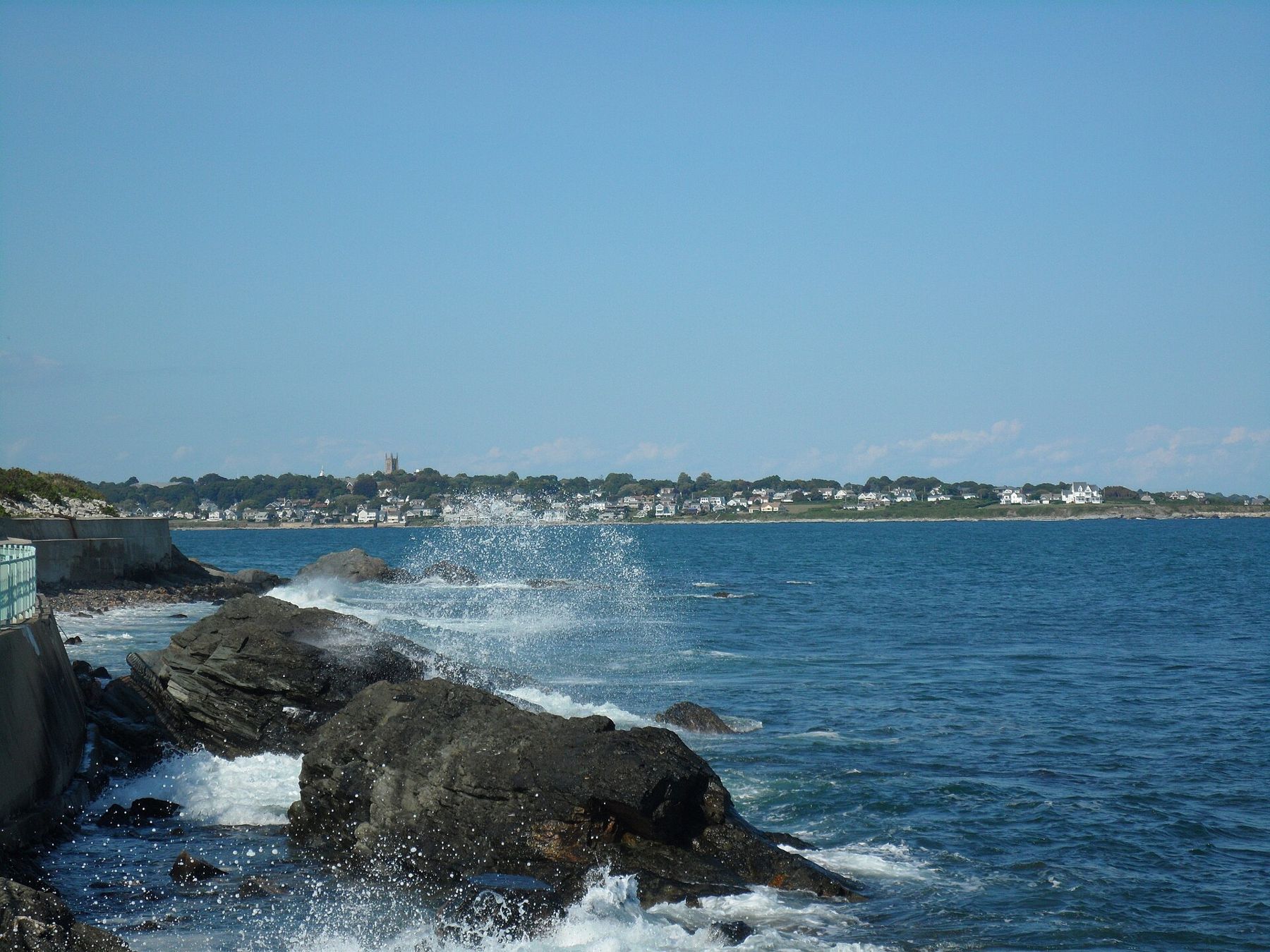
The Cliff Walk runs for about three and a half miles along the eastern shore of Newport, between the Atlantic and the back lawns of the summer houses on Bellevue Avenue and Ochre Point. It is a public path because the shore is public: fishermen and walkers held on to their right of way along the water even as the estates went up behind it, and the town and state have kept it open ever since. The walk was named a National Recreation Trail in the 1970s.
The northern part is the gentle part. From Memorial Boulevard to Forty Steps and on toward Ochre Point the path is mostly paved, with a low wall or fence on the sea side and hedges, lawns and iron railings on the other. You can walk it in street shoes, turn back whenever you like and still see the best of what made the walk famous.
Joining at the beach end
The usual start is at the eastern end of Memorial Boulevard, where the road drops toward Easton's Beach. The path climbs away from the road along the edge of Easton's Bay, and within a few minutes the traffic noise falls behind and the sea opens out to the east. Across the bay you see the long curve of the beach, the low shore of Middletown beyond it, and on a clear morning the ridge above Second Beach and Sachuest Point.
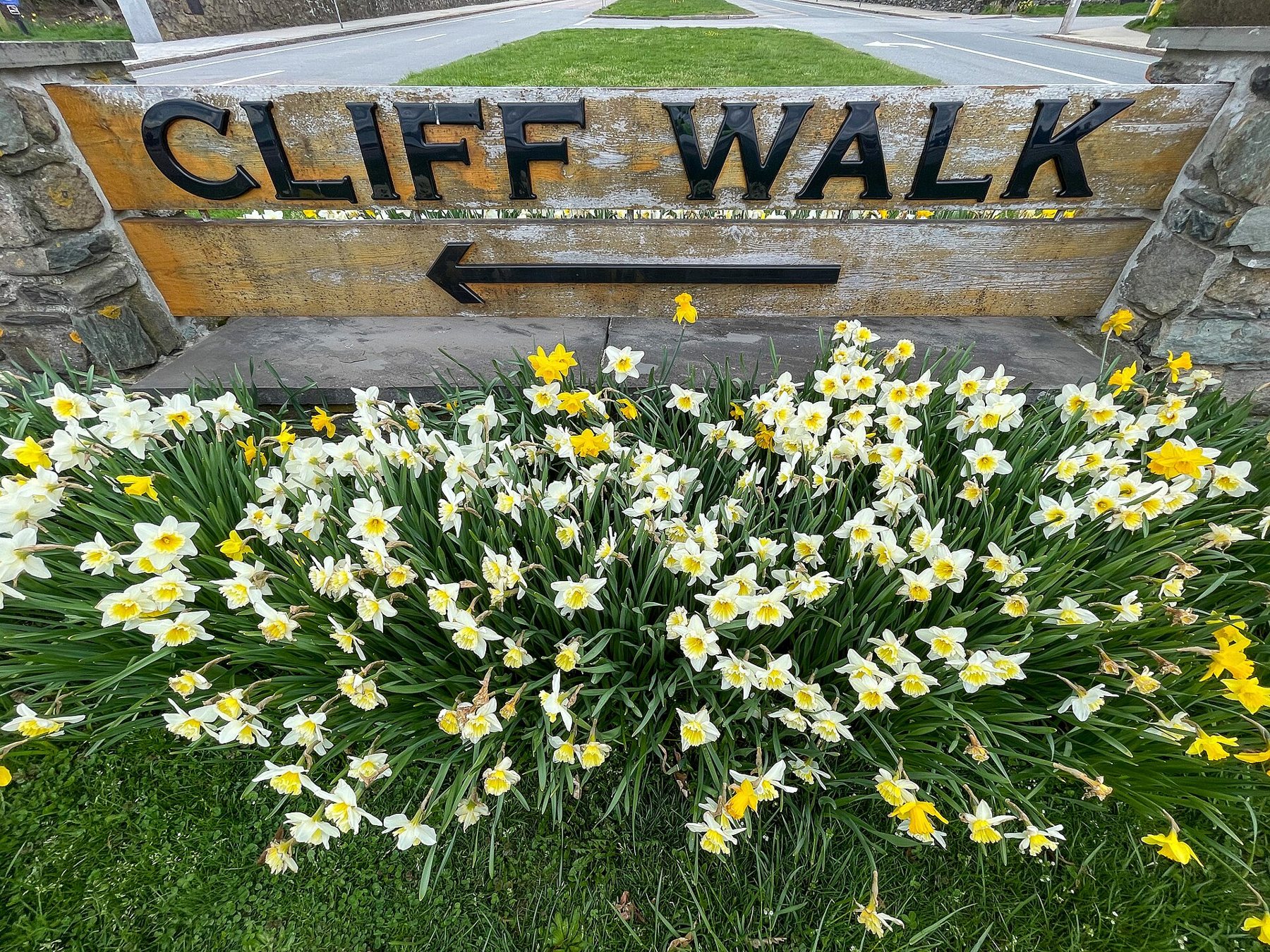
A second way in is at the end of Narragansett Avenue, which meets the shore at Forty Steps. Several other streets end at the path farther south, so you never need to walk the whole length to reach a particular stretch, and you can loop back up a side street to Bellevue Avenue instead of retracing your steps.
Parking is the hard part in summer. Street spaces near the entrances are few, often time-limited and quickly taken; the beach lots at Easton's Beach are larger but charge in season. Rules and fees change, so check the signs and current town information before you go. Many people leave the car in town and walk out along Memorial Boulevard or Narragansett Avenue, which adds a pleasant twenty minutes or so.
The stair at Forty Steps
Forty Steps is a stone stairway down the face of the cliff at the end of Narragansett Avenue, ending at a small landing above the rocks. The first steps here were wooden, and the story told in town is that the staff of the summer houses came down on their evenings off to meet, talk and play music above the water. The stair has been rebuilt more than once after storms, and the count of steps is not quite what the name promises.
Go down when the sea is quiet. From the landing you hear the water working in and out of the rocks below, and you look straight along the coast in both directions, which you cannot do from the path above. On a rough day, with swell coming in from the southeast, stay at the top: the lower steps take spray and the stone stays wet long after the wave has gone.
From the landing you hear the water working in and out of the rocks below, and you look straight along the coast in both directions, which you cannot do from the path above.
Lawns on one side, the Atlantic on the other
South of Forty Steps the path passes the grounds of Salve Regina University, which occupies several of the old summer estates, including Ochre Court, a great stone house of the 1890s whose roofline you see above the trees. Beyond it comes the long ocean lawn of The Breakers, the Vanderbilt house of the mid-1890s, sitting well back from the cliff behind a fence and a row of shrubs. From the path you see the seaward side of the house, the side its owners looked out from, rather than the formal entrance facing the street.
This contrast is the whole point of the northern walk: the houses face the sea, and the public walks between them and it. Behind the fences are lawns cut like carpets; on your left the rocks are dark, broken and wet, and the water is never still.
Also under flag CThe rough southern Cliff Walk to Bailey's Beach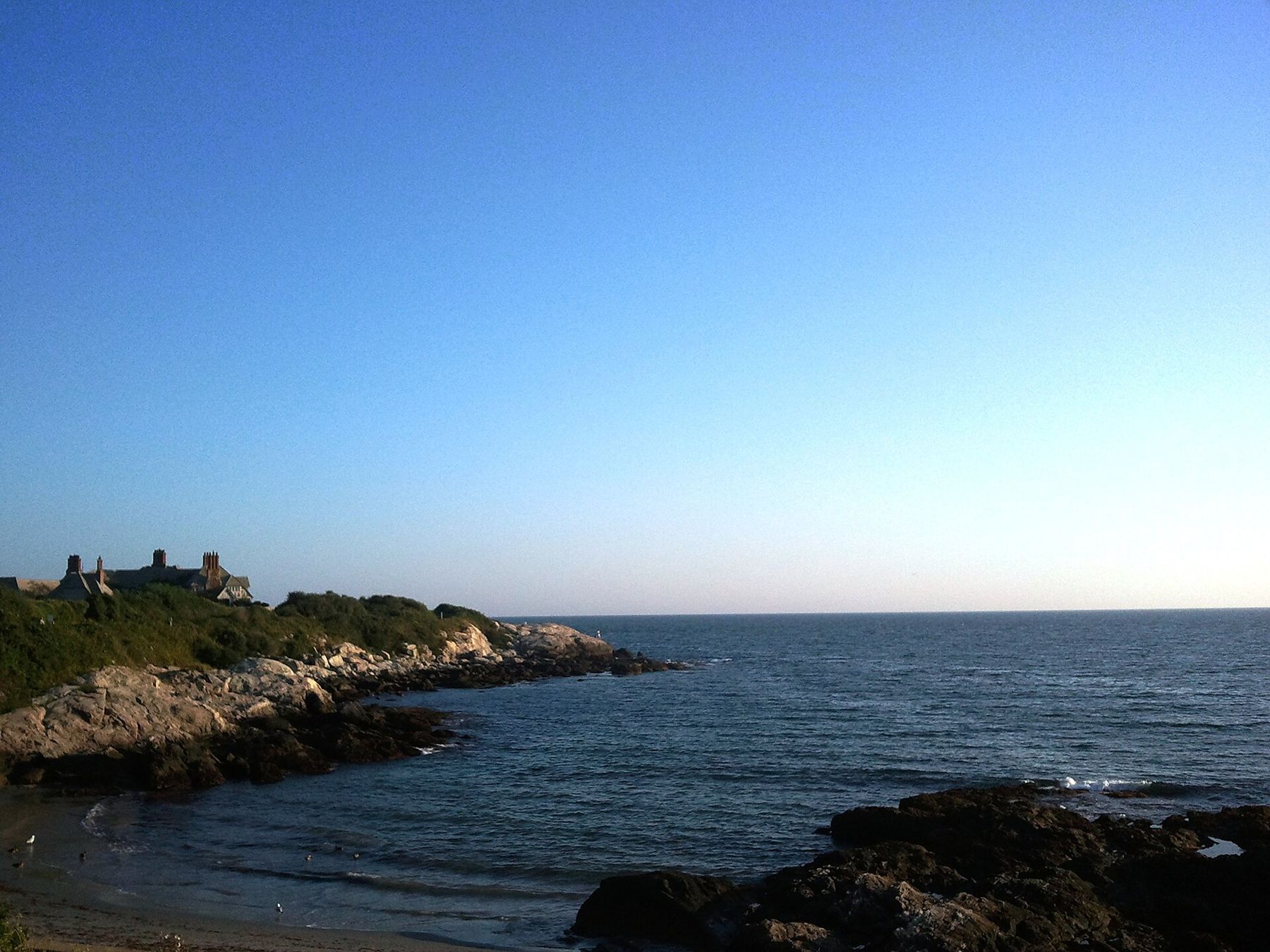
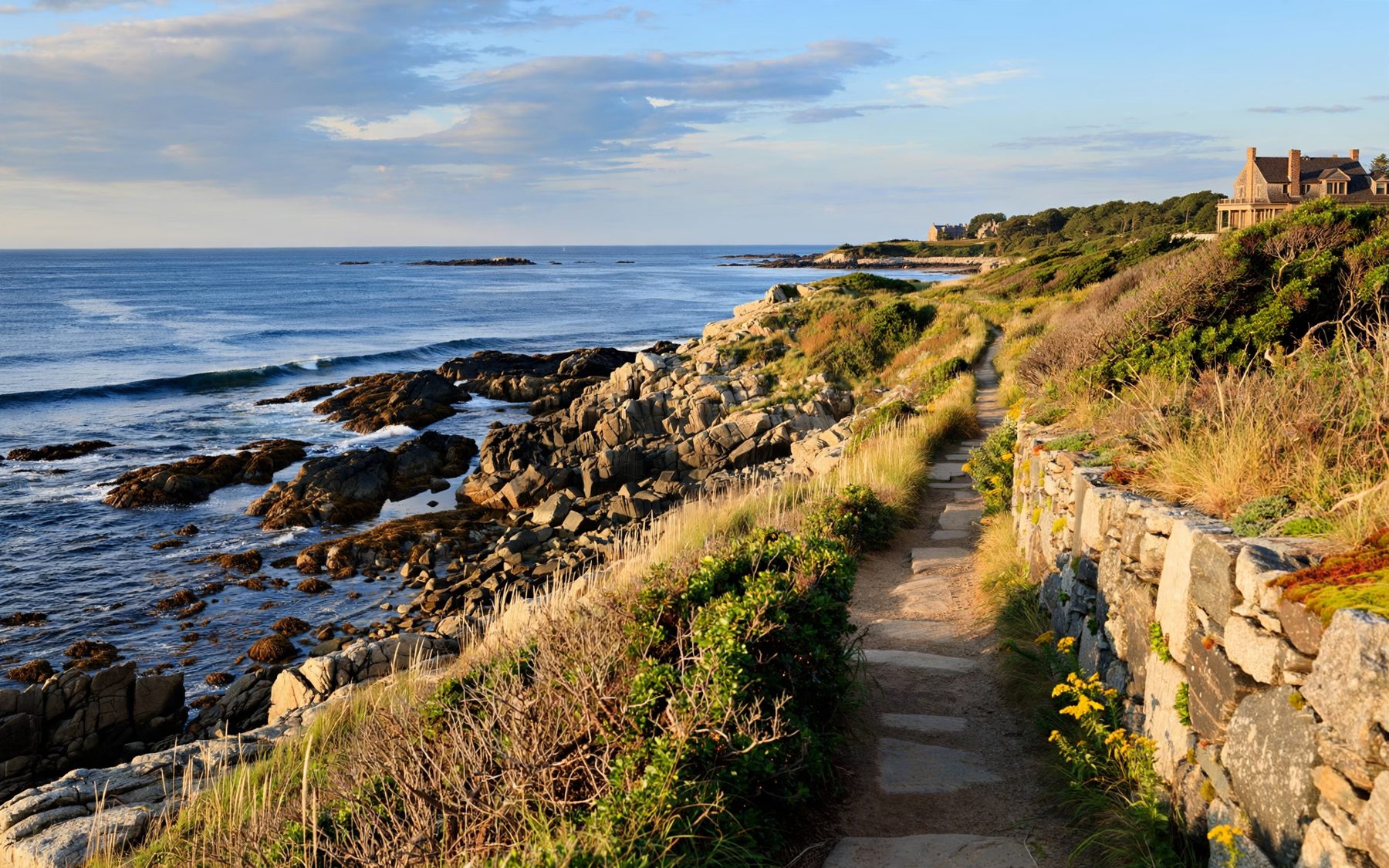
Ochre Point, below The Breakers, is the low headland where the coast turns slightly to the south. The rock here is layered and tilted, and in places the path runs right along the top of it. Gulls stand on the ledges, and in winter you may see eiders and other sea ducks riding the swell just offshore.
What the paved mile asks of you
The northern stretch is the most level and best kept part of the Cliff Walk, but it is still a cliff path. There are slopes, some steps, uneven paving in places and drops close to the edge where the fence is low. Parts near the Memorial Boulevard end can be managed with a pushchair or a wheelchair with help; access becomes harder as you go south. Conditions change after storms and repairs, so look for current notices at the entrances before you set out.
Keep to the path. The ground between it and the sea is loose in places, and the cliff edge has given way more than once in heavy weather. Children should be within reach near Forty Steps and wherever the wall drops.
There are no shops, cafes or toilets along the path itself. Bring water, and use the facilities at the beach or in town before you start.
Timing the northern walk
From Memorial Boulevard to Forty Steps takes about a quarter of an hour at an easy pace; on to the far side of Ochre Point and back to the start is a comfortable hour and a half with stops. Early morning is best. The light comes off the sea from the east, the path is quiet, and the lawns are still wet with dew. By late morning in July and August the path is busy, and on summer weekends you walk in a steady stream of people.
Spring and autumn suit the walk better than high summer. In May the daffodils are out along the Memorial Boulevard end and the hedges are new; in September and October the sea is still warm enough to soften the air and the crowds have thinned. Winter walks can be beautiful on a clear, still day, but ice forms on the paving and the steps, and a northeast wind makes the open stretches bitter.
If you want more after the paved section, the path continues south into rougher ground, past Rosecliff and Marble House, with tunnels and boulder fields toward the end. Many walkers instead turn inland at one of the side streets and come back along Bellevue Avenue, seeing from the road the fronts of the houses whose backs they have just walked past. Others pair the walk with a different shore altogether, such as the open rocks at Brenton Point at the far end of Ocean Drive.