The rough southern Cliff Walk to Bailey's Beach
Past the paved mile, the Cliff Walk turns to rock, tunnels and loose stone above open water, ending at Bailey's Beach. Wear proper shoes and check which parts are open.
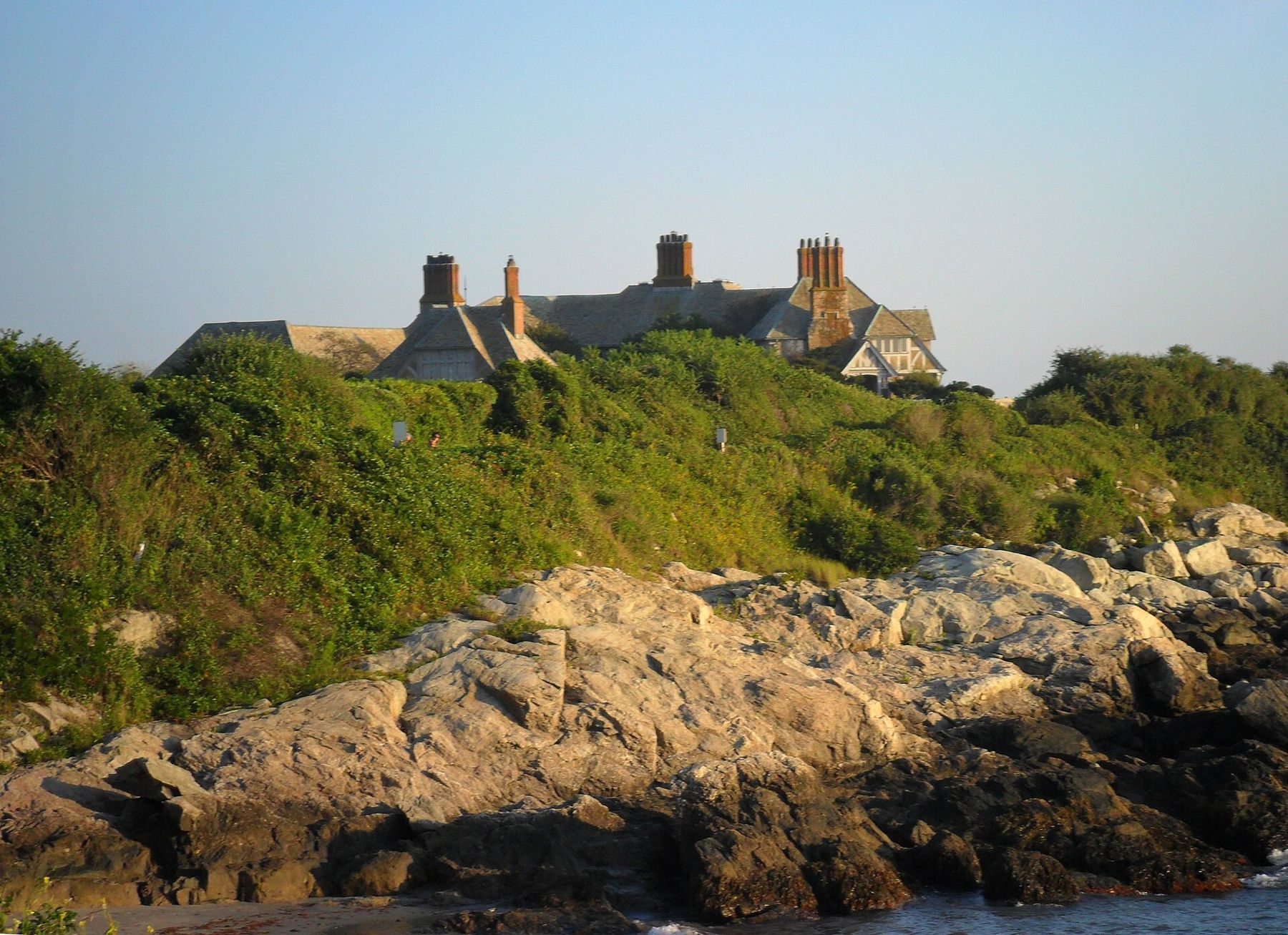
South of Ruggles Avenue the Cliff Walk changes character. The paving gives out, the path drops closer to the water, and for long stretches you are walking on rough stone, packed earth or across boulders set along the shore. It is the part of the walk that feels most like a coast path rather than a promenade, and it is the part most often damaged by storms.
What changes past Ruggles Avenue
The northern Cliff Walk, from Memorial Boulevard to Forty Steps, is easy going; the description in the paved northern stretch covers it. Past Ruggles Avenue the walk becomes a mix of path, steps and rock, with stretches where you choose your own footing over large stones laid as riprap. There are fences in places and none in others. The drops are not great, but a fall onto wet rock is a serious thing, and there is little shelter if the weather turns.
Go at your own pace and allow time. The full southern section, from Ruggles Avenue to the end at Ledge Road, takes most people a good hour or more one way, and longer if you stop. You come back either the same way or inland along Bellevue Avenue.
The surface varies from one stretch to the next. In places the path is a narrow earth track between rose bushes and the cliff edge; in others it is a line of flat-topped boulders with gaps between them, where you step from stone to stone. Iron railings and old stone walls mark some of the estate boundaries, and here and there you pass a gate or a flight of private steps that once led from a lawn down to the water.
Closures after storms
The southern stretch has been closed in places after storms, sometimes for long periods while the town and state repair collapsed sections of path and sea wall. Hurricanes and winter nor'easters have both taken parts of it away over the years. Closures may be marked with fencing and signs at the access points; do not climb around them, since the ground beyond is often undercut.
Before you go, check the current status of the walk with the city and state, and look for notices at the entrances. If a section is shut, you can still reach the stretches either side of it from the side streets that run down from Bellevue Avenue.
The tunnels and the tea house
Two short tunnels carry the path through rock outcrops along the southern half. They are dark only for a few steps, low enough that a tall walker may stoop, and wet underfoot after rain. Coming out of them, you meet the open sea again with some force.
Behind Marble House, at the cliff edge, stands the Chinese tea house built for Alva Vanderbilt Belmont in the 1910s, a red and green lacquered pavilion looking out to sea. It is the most surprising building on the whole walk, and from the path you see it at close quarters. It belongs to the Marble House grounds, which the Preservation Society of Newport County opens on its own schedule; the Marble House and Rosecliff story covers the house itself.
Rough Point and the last houses
Farther south the path passes Rough Point, a large stone house on its own headland, built for a Vanderbilt in the 1880s and later the home of Doris Duke, the tobacco heiress. It is now a museum with house tours in season; check before you go. From the walk you see its seaward side and the rough rocks that give the point its name.
Also under flag OTen miles of Ocean DriveNear the end of the walk, set back above the rocks, is the house the architect John Russell Pope built for himself, known as The Waves, with its steep slate roofs and clustered chimneys. Like the other houses along this stretch it is private; you see it from the path, as you are meant to.
Bailey's Beach and the way back
The Cliff Walk ends at Ledge Road, beside Bailey's Beach. Most of that beach belongs to a private club, though there is a short public stretch at its edge. In the evening the sun sets behind the headlands to the west, and the water in the cove catches the light.
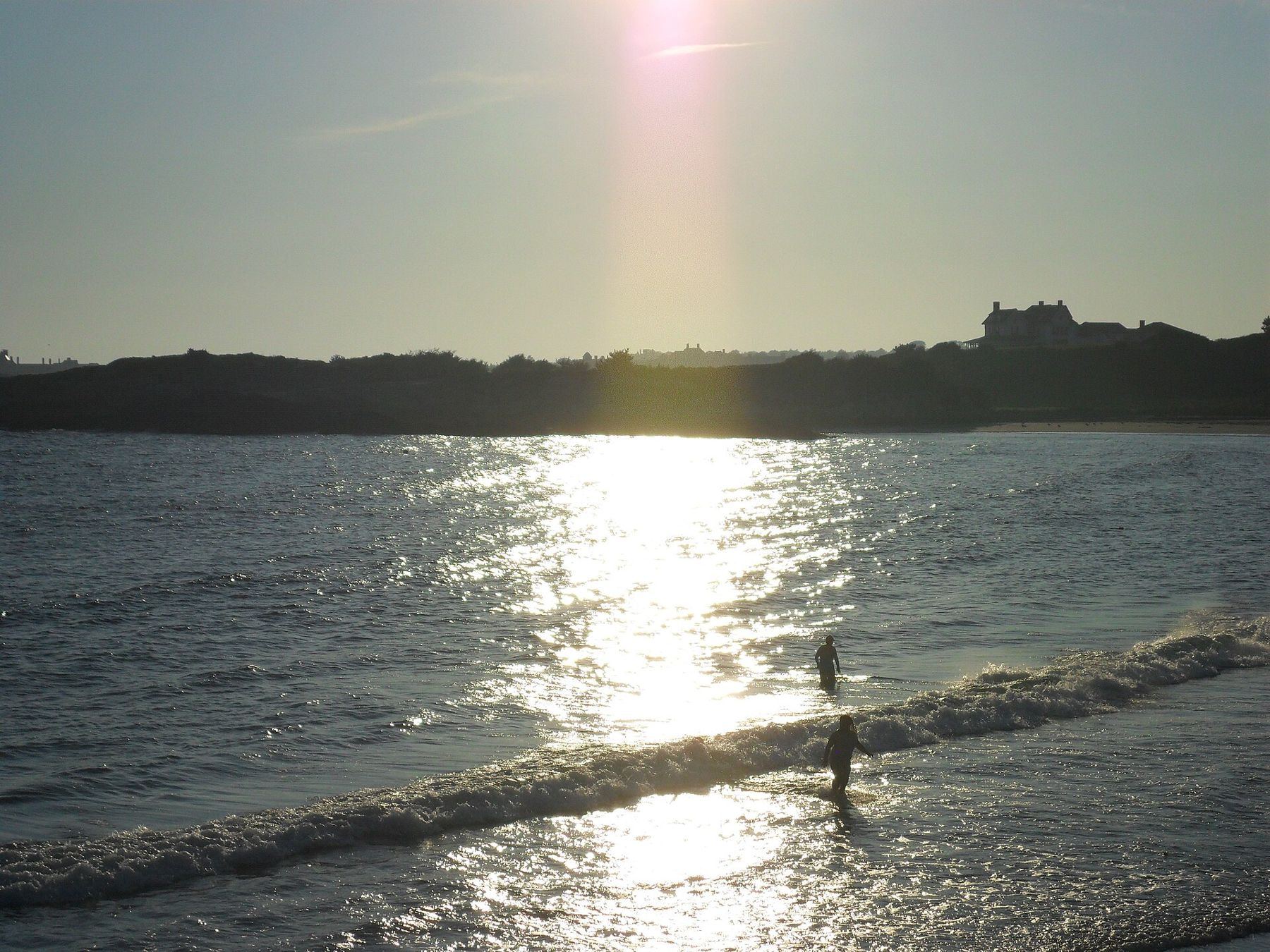
Looking southwest from the end of the walk, you see the start of Ocean Drive and the low rocks of Gooseberry Island offshore. Beach roses and dune grass grow in the sandy ground above the rocks, and in early summer the air smells of them.
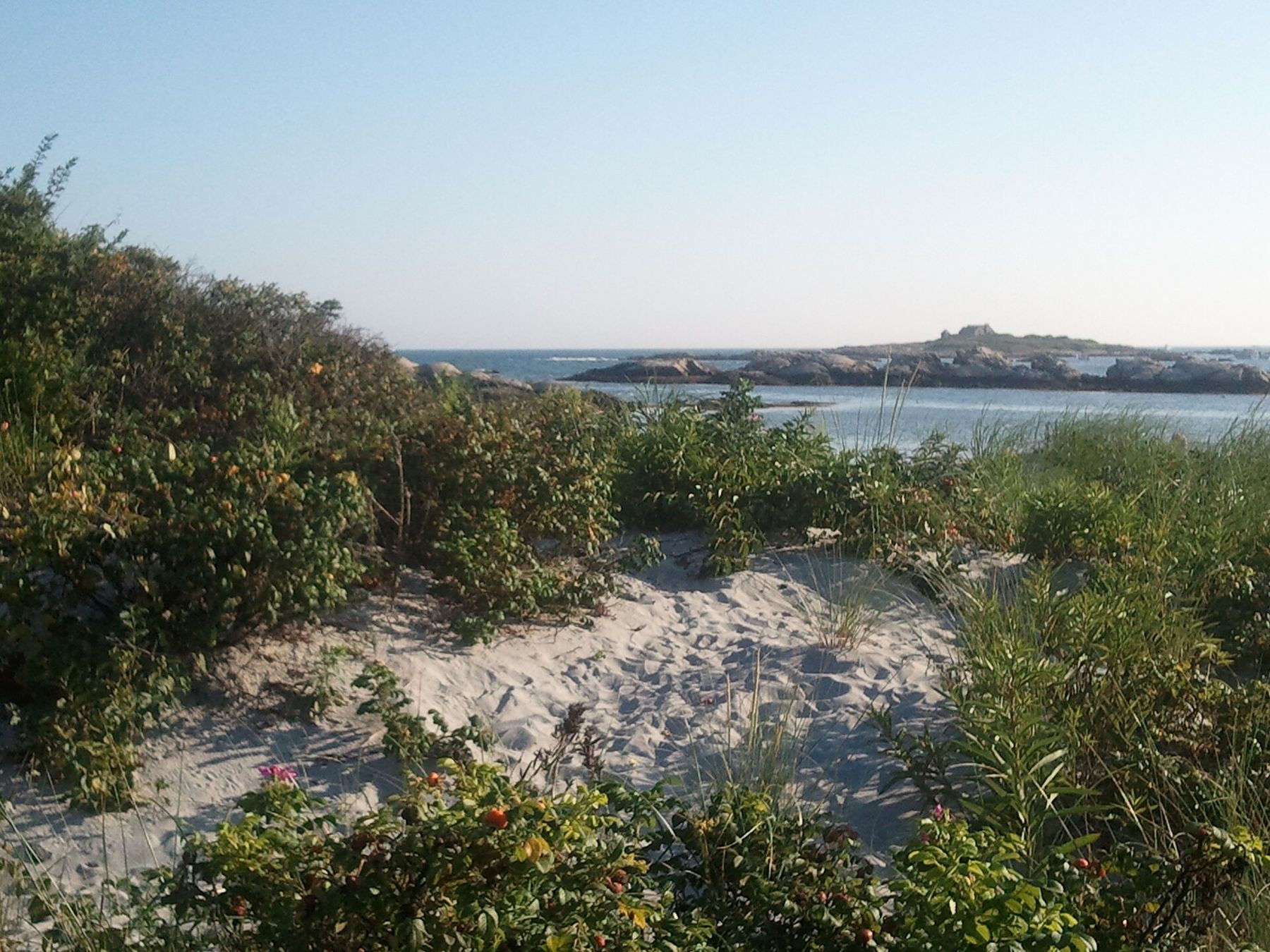
From Ledge Road you can walk back up Bellevue Avenue toward town, which is a long but level walk past the gates of the houses you have just seen from behind, or follow the coast west along Ocean Drive. There are no facilities at the end of the Cliff Walk; plan accordingly.
Shoes, tide and spray
Wear shoes or boots with a proper grip; sandals and smooth soles are a poor choice on the boulder sections. A light waterproof layer is worth carrying even on a bright day, because the spray reaches higher than you expect when there is a swell running.
Keep your hands free on the boulder sections. A small pack on your back is easier than a bag on the shoulder, and a phone belongs in a pocket that closes.
The tide makes less difference to the path than the sea state does. A calm day at high water is easier than a rough day at low. Watch the waves for a few minutes before you cross the lowest sections, and if spray is landing on the path, wait or turn back. Never climb down onto the rocks to look at the water; the swells along this shore come in sets, and the large wave arrives after the small ones have made you comfortable.
In winter, frost and ice make the rock sections hazardous, and the wind off the sea can be fierce. The southern walk is at its best on a still, clear morning in late spring or early autumn, when the light is low, the path is quiet and the rocks are dry.