Purgatory Chasm, Second Beach and Sachuest Point
East of Newport, Middletown keeps a quieter shore: a deep cleft in the rock, the island's longest beach, and a wildlife refuge on the point where sea ducks spend the winter.
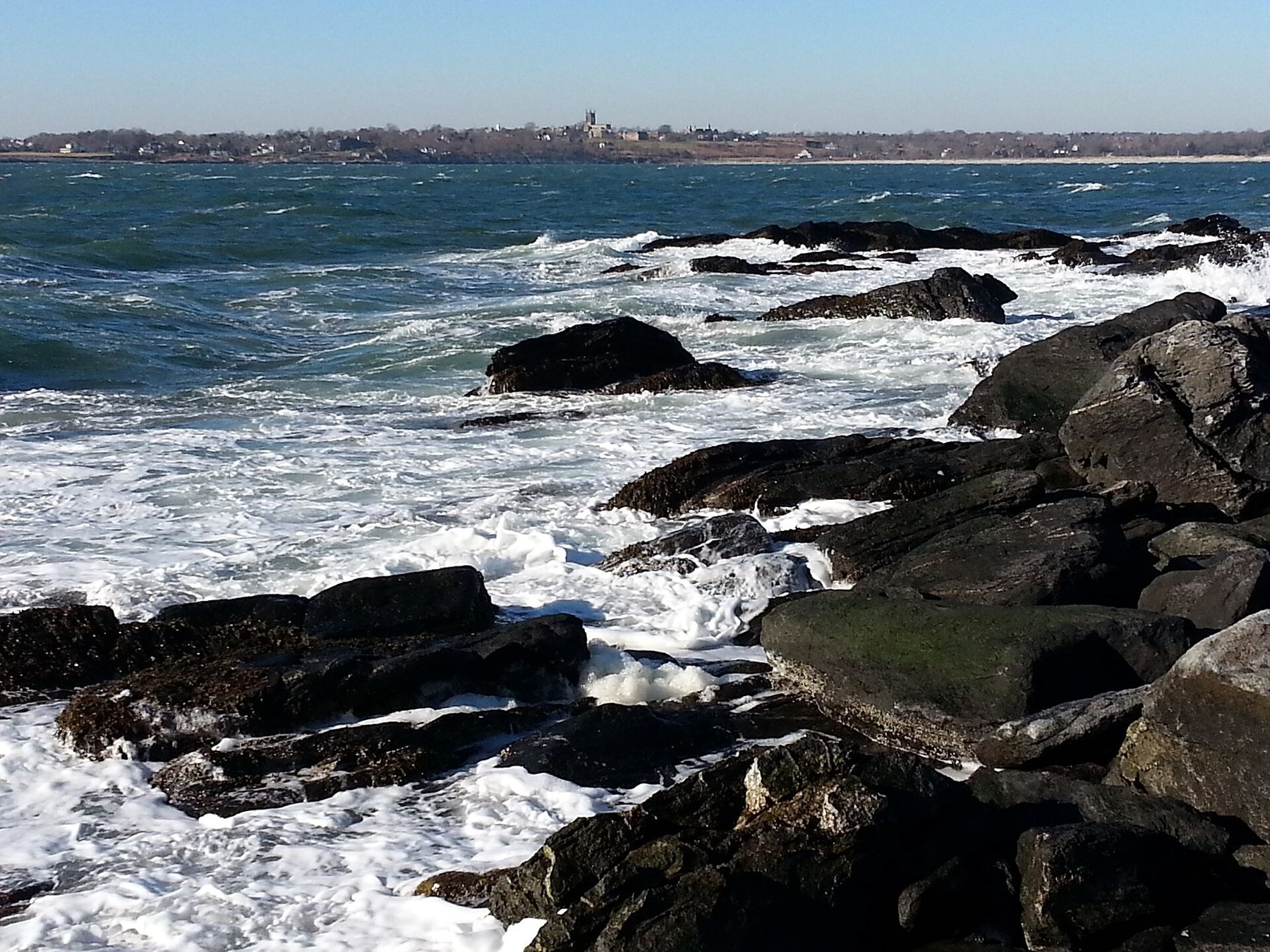
Leave Newport over the hill past Easton's Beach and you are in Middletown, on a shore that faces east and south across the mouth of the Sakonnet River. There are no mansions here to speak of. Instead there is a deep crack in the cliff at Purgatory Chasm, the long sweep of Second Beach, and at the end of the road a wildlife refuge that takes up a whole headland.
The cleft at Purgatory
Purgatory Chasm is a narrow cleft in the rock above the sea, just off Purgatory Road, where the cliff has split and the water has worked into the gap. You walk out across a small rocky area to the edge and look down: the walls drop steeply to the sea, and on a swell the water surges in and out of the bottom with a hollow sound.
The rock is the reason to stop. It is a conglomerate, a stone made of rounded pebbles and cobbles cemented together and then squeezed and stretched over a very long time, so that many of the pebbles look drawn out like eggs. The cleft follows a line of weakness in it. Look at the stone under your feet before you look down.
The chasm is most dramatic around high tide on a day with some swell running, when the water reaches farthest into the cleft. In flat calm it is quieter, but you see more of the rock walls. Parking near it is limited.
There are local legends attached to the chasm, as there are to most such places. What matters on the ground is the edge: it is sheer, unfenced in places and close to where you stand. Keep children back, stay off the rocks when they are wet, and do not try to jump the gap.
Second Beach and its neighbours
Below the chasm the road runs down to Second Beach, also called Sachuest Beach, the longest beach on Aquidneck Island. It faces south into open water, which gives it more surf than the beaches of the bay, and in summer it is the island's busiest beach. The town of Middletown runs it, with parking fees and lifeguards in season; check before you go.
Behind the western part of the beach rises a rocky ridge, and on it stands Hanging Rock, a tall outcrop above the marsh. The philosopher George Berkeley, who lived in Middletown for a few years in the 1720s and 1730s, is said to have done his thinking there.
Third Beach lies on the other side of the point, facing the Sakonnet River. It is calmer, with smaller waves and shallower water, and families with small children often prefer it.
Surfers favour the eastern end of Second Beach, toward the point, when a swell comes in from the south; swimmers keep to the guarded areas.
Also under flag SNewport's year, season by seasonOut of season, both beaches are open ground for long walks. In winter you may have the sand nearly to yourself, with only gulls, a few dog walkers and the wind.
The refuge loop at Sachuest Point
At the end of Sachuest Point Road the land becomes the Sachuest Point National Wildlife Refuge, run by the US Fish and Wildlife Service. The point was once used by the Navy; today it is grassland, shrub and rocky shore, protected for birds and open to walkers on marked trails.
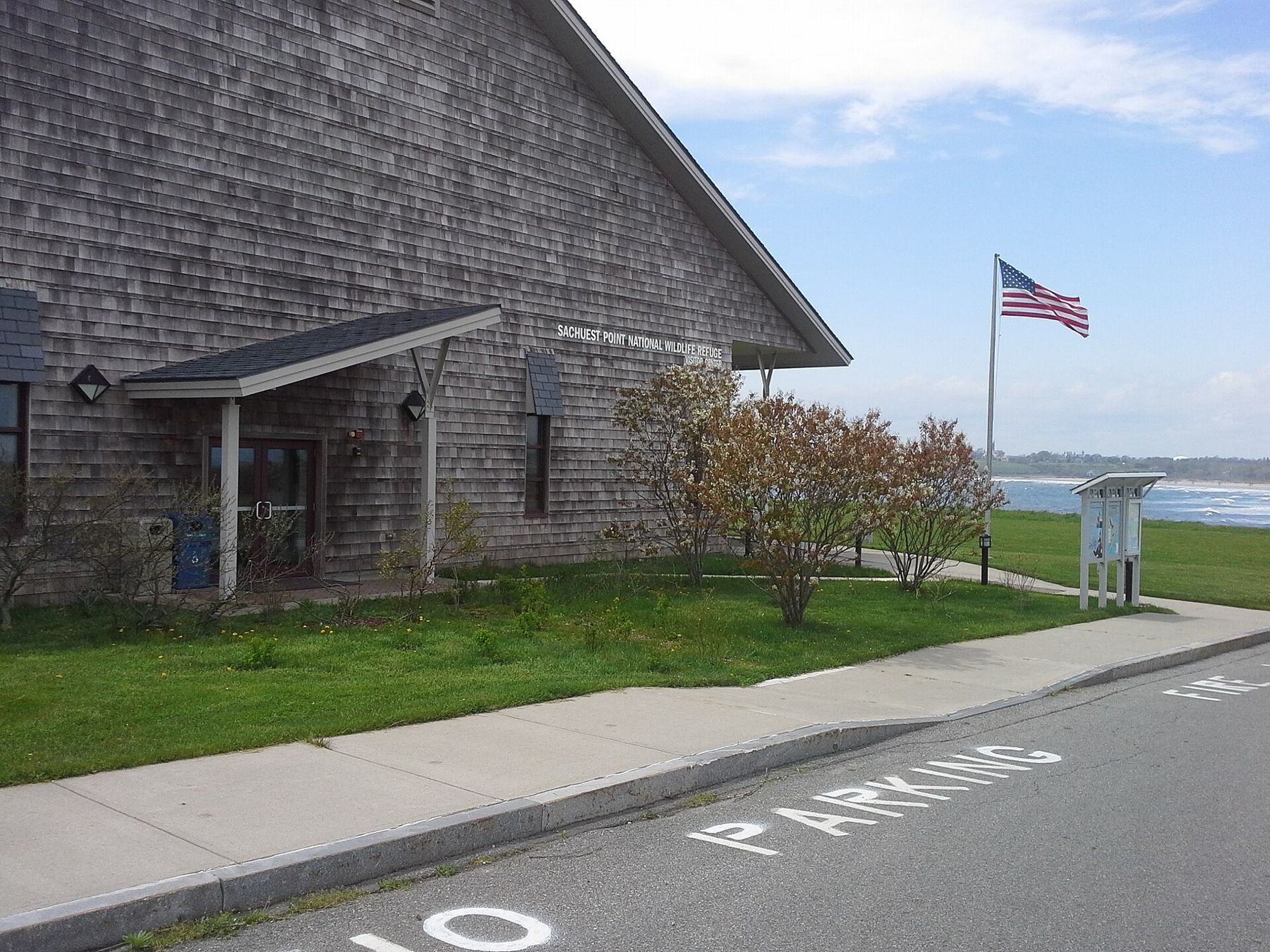
A loop of a few miles goes out from the visitor centre and around the edge of the point, with short spurs to viewing spots above the rocks. The trails are mostly level gravel and earth. You walk with the sea on one side and low thickets of bayberry and shrubs on the other, and every turn of the path gives a different view: across the Sakonnet to Little Compton, south to open ocean, west back toward Newport and the tower on the ridge above Second Beach.
Stay on the trails; the refuge is there for the birds, and dogs are not allowed. Hours, rules and visitor centre opening times change, so check before you go.
Birds in winter
Sachuest Point is best known among birders for its winter sea ducks. From late autumn into spring, harlequin ducks gather on the rocks and in the surf off the point, along with common eiders, scoters, long-tailed ducks and loons. The harlequins in particular are uncommon this far south, and the point is one of the more reliable places in New England to see them.
Bring binoculars, and scan the white water close to the rocks rather than the open sea. Purple sandpipers sometimes feed on the wet ledges at low tide. In some winters snowy owls turn up in the grassland. Spring and autumn bring migrating songbirds into the thickets, and in summer the refuge has nesting birds and a fair amount of poison ivy beside the trails.
Dress more warmly than seems necessary. The point has no shelter, and the cold off the water in January is penetrating.
A morning on the Middletown shore
A good plan is to start early at the refuge, when the light is low and the birds are active, walk the loop slowly, and then drive back past Second Beach to Purgatory Chasm on the way into town. On a calm day you can add a walk along the sand; on a rough day the chasm is at its most impressive, though also at its most dangerous.
From the chasm it is a short drive back to Easton's Beach and the start of the Cliff Walk, so the two shores make a natural pair. Together they give you the two faces of the island's coast: the summer houses above the rocks on the Newport side, and on the Middletown side open ground, sea birds and not much else. For a third, and quite different, piece of shoreline, follow Ocean Drive west along the far side of Newport.